

08/11/2026 · 5 min read
Mastering Your Play Space: How to Utilize D-Rings and O-Rings Effectively
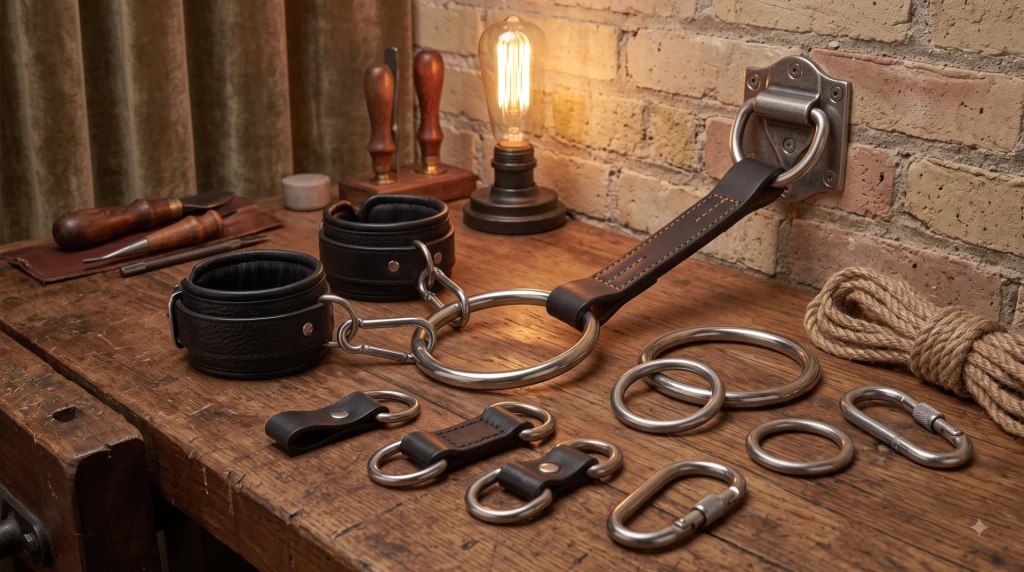
Mastering Your Play Space: How to Utilize D-Rings and O-Rings Effectively
When designing a private dungeon or upgrading your bedroom for the BDSM lifestyle, aesthetics are only half the equation. The dark elegance of a room sets the psychological mood, but the true mastery of a play space lies in its functional engineering. To fully surrender to an experience—or to command it with absolute authority—you must have unwavering trust in your equipment.
At the heart of this trust are the unsung heroes of fantasy furniture: the restraint hardware. Specifically, D-Rings and O-Rings.
While they may seem like minor details, understanding how to utilize these anchor points effectively separates a chaotic scene from a masterfully orchestrated one. In this guide, we will explore the distinct differences between D-rings and O-rings, their strategic placements on a premium BDSM bed, and how to harness them for the ultimate safe play experience.
1. The Foundation of Safe Play: Why Hardware Matters
In the realm of BDSM, safe play relies heavily on predictability. You need to know exactly how a rope, chain, or cuff will behave when tension is applied.
Standard home furniture lacks dedicated attachment points. Wrapping ropes around a wooden bedpost or a flimsy metal leg creates a high risk of slipping, friction burns, or catastrophic structural failure. By investing in heavy-duty BDSM beds with integrated, welded steel anchor points, you eliminate these risks entirely. You are no longer improvising; you are operating within a purpose-built environment.
2. D-Rings vs. O-Rings: Understanding the Mechanics
To utilize your anchor systems effectively, you must first understand the mechanical differences between the two primary types of hardware.
D-Rings: The Anchors of Stability As the name suggests, these rings are shaped like the letter "D". The straight side is welded or bolted securely to the frame, while the curved side faces outward. * The Benefit: D-rings lay flat against the frame when not in use, maintaining the sleek, unencumbered aesthetic of your furniture. * Best Use Case: Because the ring cannot spin, a D-ring prevents lateral sliding. This makes them the ultimate choice for rigid, immobile restraint scenarios. When you lock a carabiner or heavy leather cuff to a D-ring, that limb stays exactly where you pinned it.
O-Rings: The Centers of Fluidity O-Rings are perfectly circular and are usually mounted within a secure steel loop or bracket that allows the ring itself to move. * The Benefit: The circular design allows for 360-degree rotation and fluid movement. * Best Use Case: O-Rings are ideal for dynamic play and rope work (Shibari). If a partner shifts their weight, the O-ring pivots with them, reducing the risk of sudden, jarring tension or chafing. They are perfect for guiding suspension lines or allowing a controlled range of motion.
3. Strategic Placement on Your BDSM Bed
A premium bondage bed, like those in the BDSMBEDS collection, does not just randomly scatter rings across the frame. Hardware is placed with ergonomic and dynamic precision. Here is how to utilize the most common placements:
- The Base Corners: Rings located at the lower four corners of the bed are your foundation. Use these for traditional spread-eagle setups, pulling the ankles and wrists down and outward to maximize exposure and vulnerability.
- Mid-Rail Anchors: Anchors placed halfway down the side rails of the bed are incredibly versatile. They are essential for securing the waist or thighs, effectively pinning a partner to the center of the mattress during high-impact sessions where lateral movement must be prevented.
- Headboard Grids: A towering, gothic metal headboard isn't just visually dominating; it is a vertical playground. Use varying heights on the headboard to secure wrists above the head, forcing the chest upward. This is highly effective for sensory play and breath play safely.
- Under-Mattress Points: Hidden rings positioned beneath the platform level allow for downward tension. By running straps or ropes down below the surface level, you pull the restrained partner deeper into the cushions, creating an inescapable feeling of being grounded.
4. Pro-Tips for Rigging and Restraints
To get the most out of your hardware, keep these rigging principles in mind:
- Use Intermediaries: Instead of tying ropes directly to the metal rings—which can cause the rope fibers to fray over time—use heavy-duty climbing carabiners to connect your ropes or cuffs to the rings. This allows for lightning-fast quick-releases if a scene needs to end abruptly.
- Cross-Tensioning: For absolute immobilization, utilize cross-tensioning. Anchor the right wrist to a lower-left side ring, and the left wrist to a lower-right side ring.
- Inspect Your Gear: Even indestructible steel requires a quick visual check. Before any scene, ensure that your carabiners are functioning smoothly and that your leather cuffs are in prime condition.
Final Thoughts: Command Your Environment
Mastering your play space means leaving nothing to chance. By understanding the specific utilities of D-rings and O-rings, you unlock endless possibilities for creative, dynamic, and deeply secure bondage.
Your desires demand an environment built to withstand them. Do not settle for furniture that limits your imagination. Explore the heavy-duty, meticulously engineered BDSMBEDS Collection today. Our metal frames feature seamlessly integrated, welded restraint systems designed for those who demand ultimate safety wrapped in dark elegance.
[Link to your BDSM Beds Category Page] — Transform your bedroom into the ultimate sanctuary today.